
Top Comic Translation Pricing Models

The price of comic translation can look simple until you count the work left after the first machine draft. Some tools translate a bubble and stop. Others handle the full page. Here are six named options, with the pricing model and workload each one suits best.
1. MangaGloss
MangaGloss is a free AI tool for manga, manhwa, and manhua. It automates OCR, translation, inpainting, and typesetting for raw comic pages.
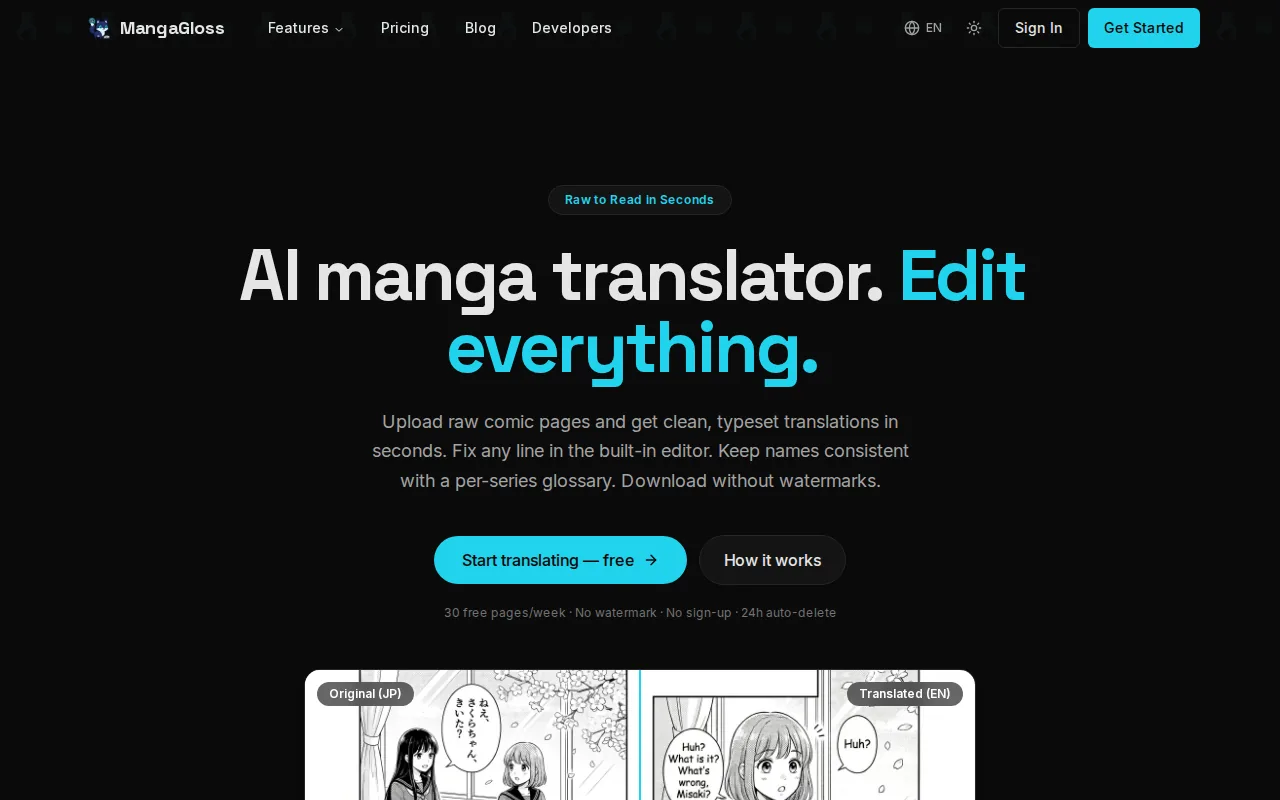
That full pipeline gives MangaGloss the clearest cost case for indie creators and small translation teams. You can upload a page and receive a translated layout without buying separate OCR software or manually repainting each speech bubble. The free tier gives users 30 pages per week, with no sign-up and no watermark.
Paid plans are based on page volume rather than a vague seat count. The Creator plan has page-based pricing, with rates available on request. The Pro plan also has page-based pricing, with rates available on request. A one-time credit pack is available, and those credits don’t expire. You can review the full MangaGloss pricing and page-credit breakdown before choosing a plan.
The free and paid tiers use the same AI pipeline. The main differences are volume and access to tools such as the built-in editor and glossary. That matters when a team wants to keep character names consistent across a long series.
The limitation is simple: page quotas still matter during a release rush. A team with several long chapters may need a higher plan or a credit pack. For most people testing a workflow, though, MangaGloss is the strongest place to start because the free model includes the full page process rather than only a text draft.
2. Scan Translator: Casual reading with a low-commitment model
Scan Translator fits readers who want quick, casual manga translation without setting up a publishing workflow. Its appeal lies in a low-commitment approach, especially when someone needs help with a few raw pages.
This type of pricing model works when usage is irregular. A reader may translate one scene today and nothing for weeks. A monthly subscription can feel wasteful in that case, while a free or light-use option keeps the first test easy.
The trade-off is control. Casual tools tend to focus on helping a person understand a page. They may leave less room for checking the text layer, correcting names, or preparing a clean export for a public release. That difference matters because optical character recognition, or OCR, only turns visible lettering into machine-readable text. It doesn’t decide if a joke, sound effect, or character name makes sense in context.
Scan Translator is best for a reader who values speed over a repeatable production system. It can make sense for a personal reading session, but a scanlation group should test how much cleanup remains after translation.
Before paying, count the pages you read in a normal month. If that number changes sharply, a free tier or pay-per-use model may beat a subscription. If you handle whole chapters every week, a page-based plan with export and editing tools is easier to budget.
3. AI Manga Translator: A small free trial before paid usage
AI Manga Translator uses a trial-first model for people reading manga on existing platforms. The available offer starts with a free trial of five pages, followed by paid usage starting at $4.99.
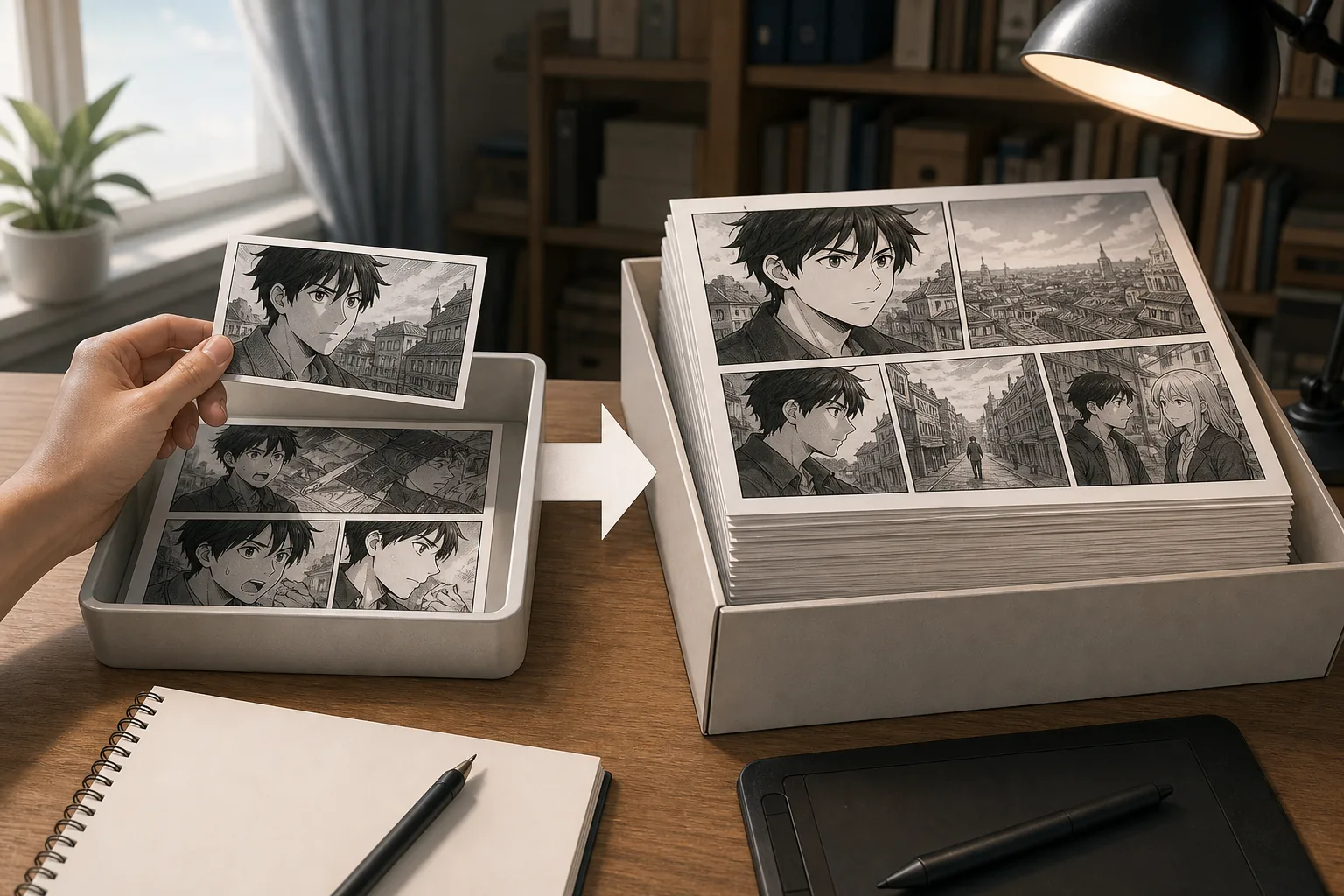
That structure suits someone who wants to test the result before making a larger commitment. Five pages can reveal whether the tool reads the source font well, handles vertical text, and produces a translation that is useful for the reader’s needs. It won’t prove how the tool performs across an entire volume.
Many other tools in this market automate only the first two tasks, so users still need to remove the source text and place the new wording by hand.
The catch is scale. A small free trial is useful for quality checks, but it doesn’t tell you the final monthly cost for a large archive. Track pages per chapter during the trial. Then multiply that figure by the number of chapters you expect to process.
Choose this model when the main job is reading content already hosted elsewhere. Choose a creator-focused tool when the final output needs clean page art, repeat edits, or a stable series glossary.
4. Torii: Model-choice flexibility for technical users
Torii is aimed at users who want to choose their AI model. That makes its value less about one advertised monthly rate and more about control over the translation engine used in a workflow.
Model choice can matter when a team compares tone, handling of slang, or performance on a specific source language. A technical user may want to run the same pages through different models and compare the output before settling on a house process.
This approach also changes the cost question. The cheapest model may produce more editing work. A higher-cost model may reduce corrections on dialogue, but only a test with your own pages can show that. Keep a short review sheet during testing. Record the number of pages processed, edits made, and pages that need a second pass.
That kind of review is similar to the way teams compare other page-based AI services. A PDF remediation pricing calculator comparison can also help frame the broader issue: the listed price is only one part of an automated content workflow. Labor left after processing can change the real cost.
Torii is a better fit for technical users who already know what they want from a model. It may be less comfortable for a reader who wants one fixed path with little setup. The more choices a service exposes, the more time the buyer must spend testing and documenting them.
Use a model-flexible service when quality checks are part of your process. If your team wants predictable output with fewer decisions, a fixed end-to-end pipeline may be easier to run.
5. Mantra Engine: Publisher-oriented localization economics
Mantra Engine is positioned for professional publishers and localization teams. Its pricing question is therefore tied to production volume, review work, and the cost of releasing a series across markets.
Publisher teams usually need more than a readable first draft. They may need a repeatable handoff between translation and review. They may also need a way to estimate the cost of a full title rather than one page at a time.
That makes a subscription, contract, or volume-based plan more likely to fit than a casual free tier. The best pricing model for a publisher should make the unit of work clear. Is the charge based on pages, words, projects, seats, or a custom service agreement? If the vendor doesn’t state that plainly, ask for a sample quote based on one chapter.
Automation depth matters just as much. If a service handles only OCR and translation, the publisher still pays staff to clean the art and set the translated text. If it also handles inpainting and typesetting, the team can spend its review time on tone and accuracy instead of page repair.
Mantra Engine is best considered by teams with a formal localization process. It may be too much for a reader who needs help with a single chapter. It may also require a sales conversation, so buyers should request details on minimum volume, revisions, file delivery, and rights to the processed pages.
For a publisher, the right quote is the one that shows both machine cost and human review cost. A low page rate can lose its appeal if every page needs heavy repair.
6. Inkover: Free access with quality-control emphasis
Inkover uses a free tier for users who want to check translation quality before paying. The free access covers the first chapter with 1,000 tokens, and no credit card is required.
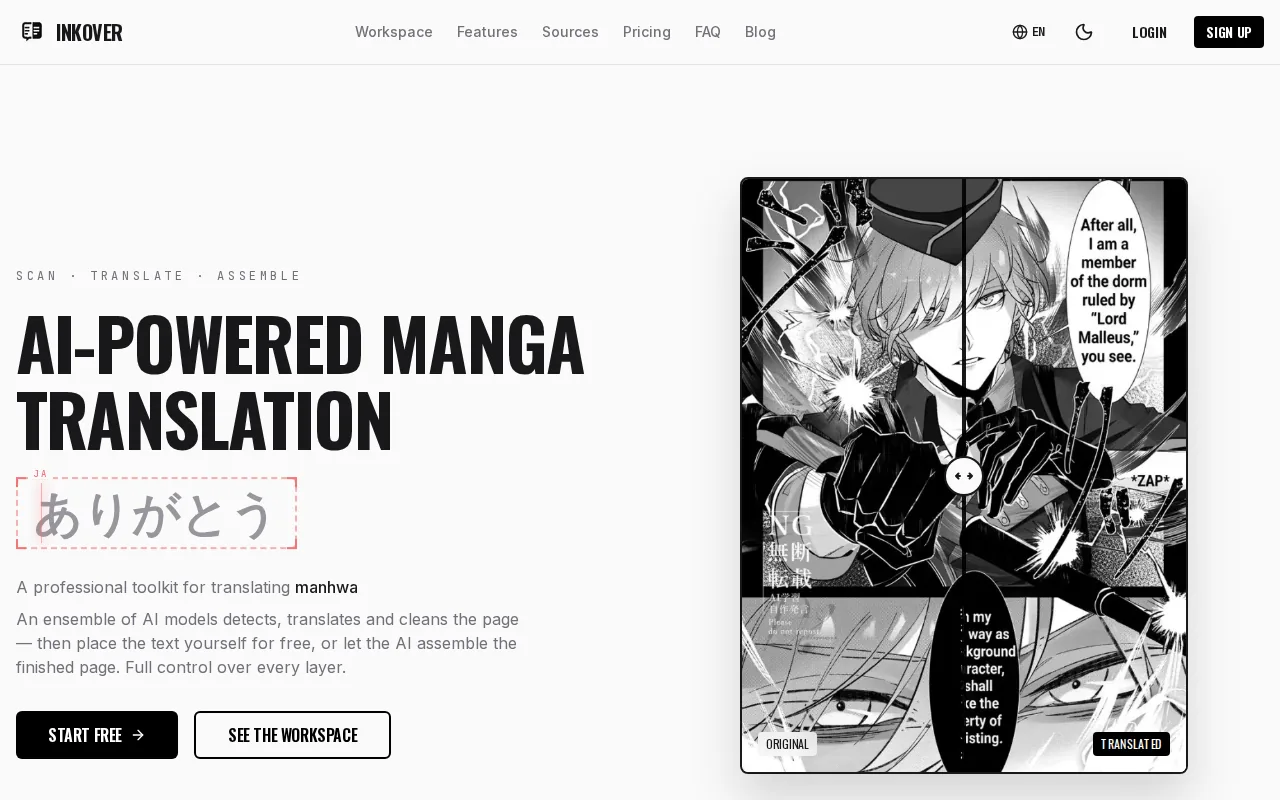
That model puts quality control first. A reader or creator can inspect how the service handles dialogue before committing money. The test should include more than clean speech bubbles. Try a page with dense text, a sound effect, or a scene where the speaker changes often.
Inkover suits users who want to judge the result themselves. That is a sensible stance in comic translation because a fluent sentence can still miss a character’s voice. Human review remains important when a translation will be published or used as a final edition.
The limitation is that a token allowance doesn’t map neatly to pages. One sparse page may use far fewer tokens than a crowded page. That makes a token-based trial harder to compare with a page-based plan.
| Option | Pricing shape | Best fit | Watch for |
|---|---|---|---|
| MangaGloss | Free tier, subscription, or expiring-free credit pack | Creators and translation teams | Page quotas during high-volume releases |
| Scan Translator | Low-commitment access | Casual reading | Limited publishing control |
| AI Manga Translator | Five-page trial, then paid use from $4.99 | Reading manga on existing platforms | A short trial may not predict chapter cost |
| Torii | Model-choice approach | Technical users | Testing takes more time |
| Mantra Engine | Publisher-oriented pricing | Localization teams | Ask about volume and review terms |
| Inkover | Free chapter trial with token limit | Quality-focused testers | Tokens don’t equal a fixed page count |
Across the wider market, pricing is often hard to compare. That leaves buyers guessing about usage limits, manual work, and the point where a free test becomes a paid workflow.
When comparing Inkover with a page-based service, translate the same sample pages. Then record the time spent fixing the output. The fastest-looking option may not be the cheapest once review time enters the calculation.
FAQ
What is the cheapest pricing model for comic translation?
A free tier is usually the cheapest starting point for automated comic translation services. It lets you test page quality before paying, but check its limits closely. A free offer may cap pages, tokens, exports, or access to editing tools. For steady work, compare the monthly page allowance with your actual chapter volume.
Do comic translation tools charge per page?
Yes, some comic translation tools charge by page or use credits tied to pages. This model is easy to track when every page uses one credit. Other services use tokens, subscriptions, or custom publisher quotes. Ask what happens with dense pages, unused credits, and extra review work before you commit.
Are free AI comic translators good enough for publishing?
Free AI comic translators can produce a useful first pass, but publishing still needs human review. OCR may misread stylized text, while machine translation can miss tone or context. Test pages with sound effects and dense dialogue. Check the inpainting and typesetting too, because a readable draft may still need page-level repair.
What factors should buyers compare besides the monthly price?
Compare automation depth, page limits, editing access, export rules, and the time left for human cleanup. These factors shape the true cost of pricing models for automated comic translation services. A low fee may be less attractive if OCR is automated but inpainting and typesetting remain manual.
Which comic translation pricing model suits a small team?
A small team usually benefits from a free test followed by a page-based plan or a credit pack. That keeps the first decision low risk and makes chapter costs easier to forecast. MangaGloss fits this pattern with free weekly access, monthly page plans, and one-time credits for teams that process pages in bursts.
Conclusion
Start with MangaGloss if you need a free, end-to-end test that includes page cleanup and typesetting. Upload a representative chapter sample, track the pages that need edits, then choose between a monthly allowance and one-time credits based on your release schedule.